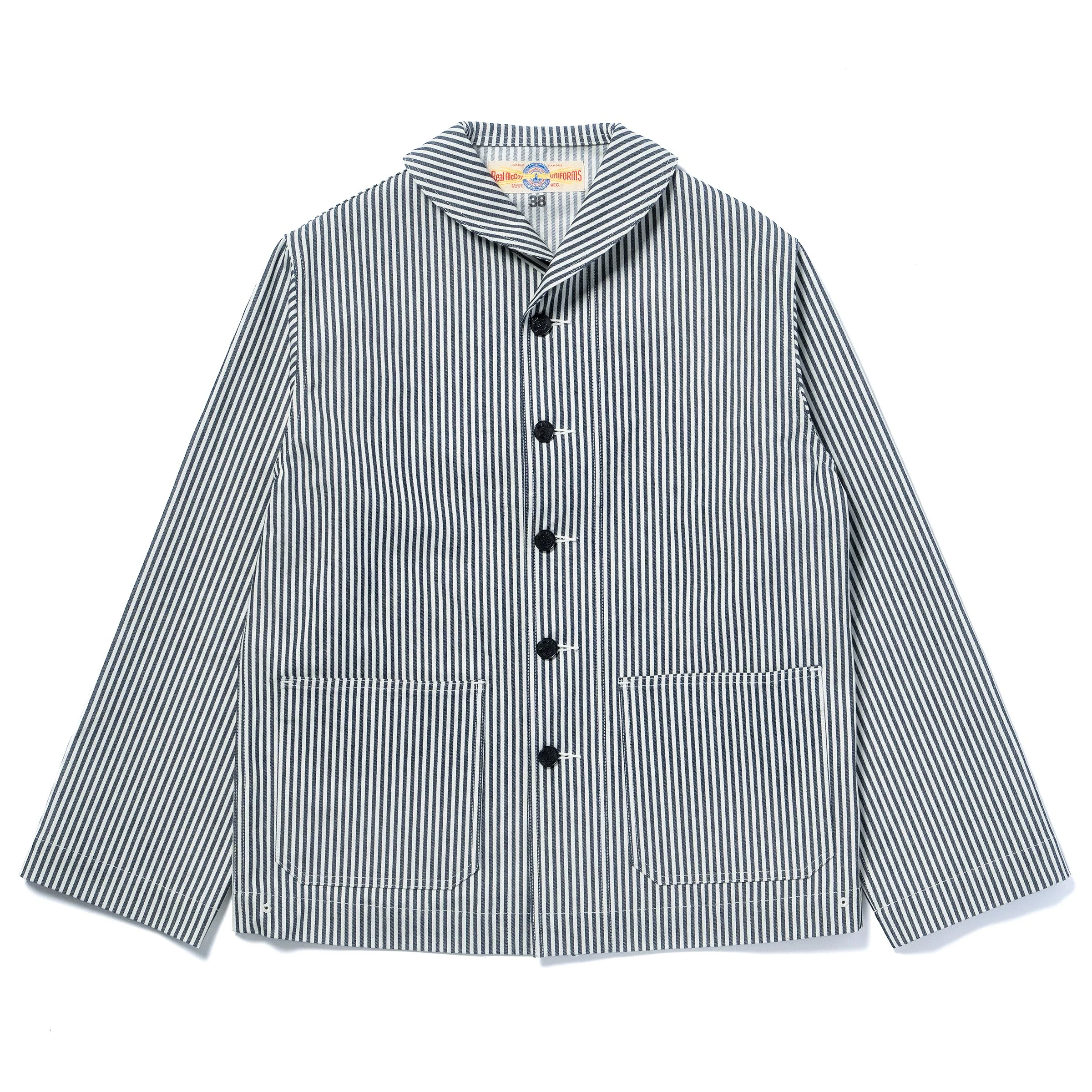
U.S. NAVY STRIPED DUNGAREE JUMPER
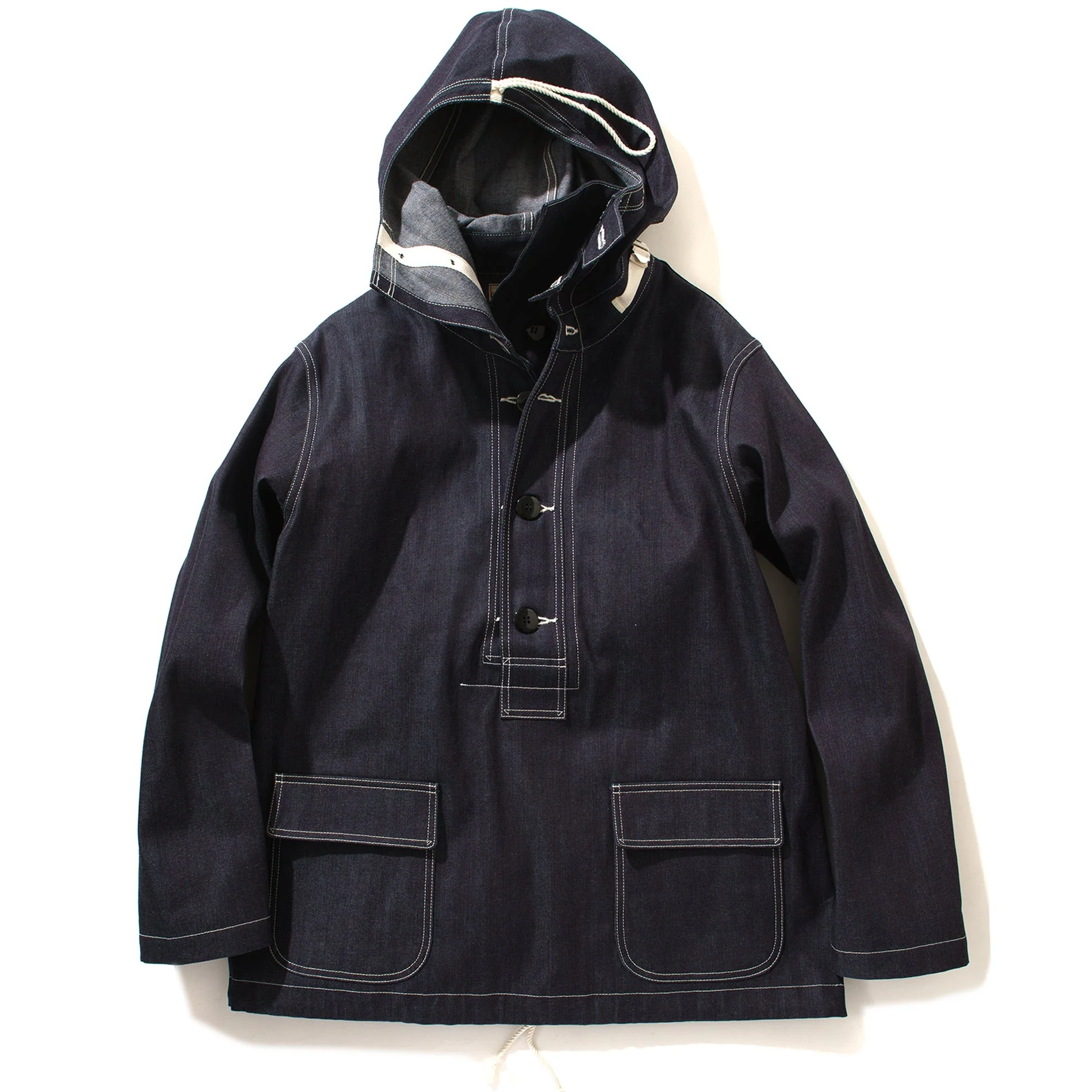
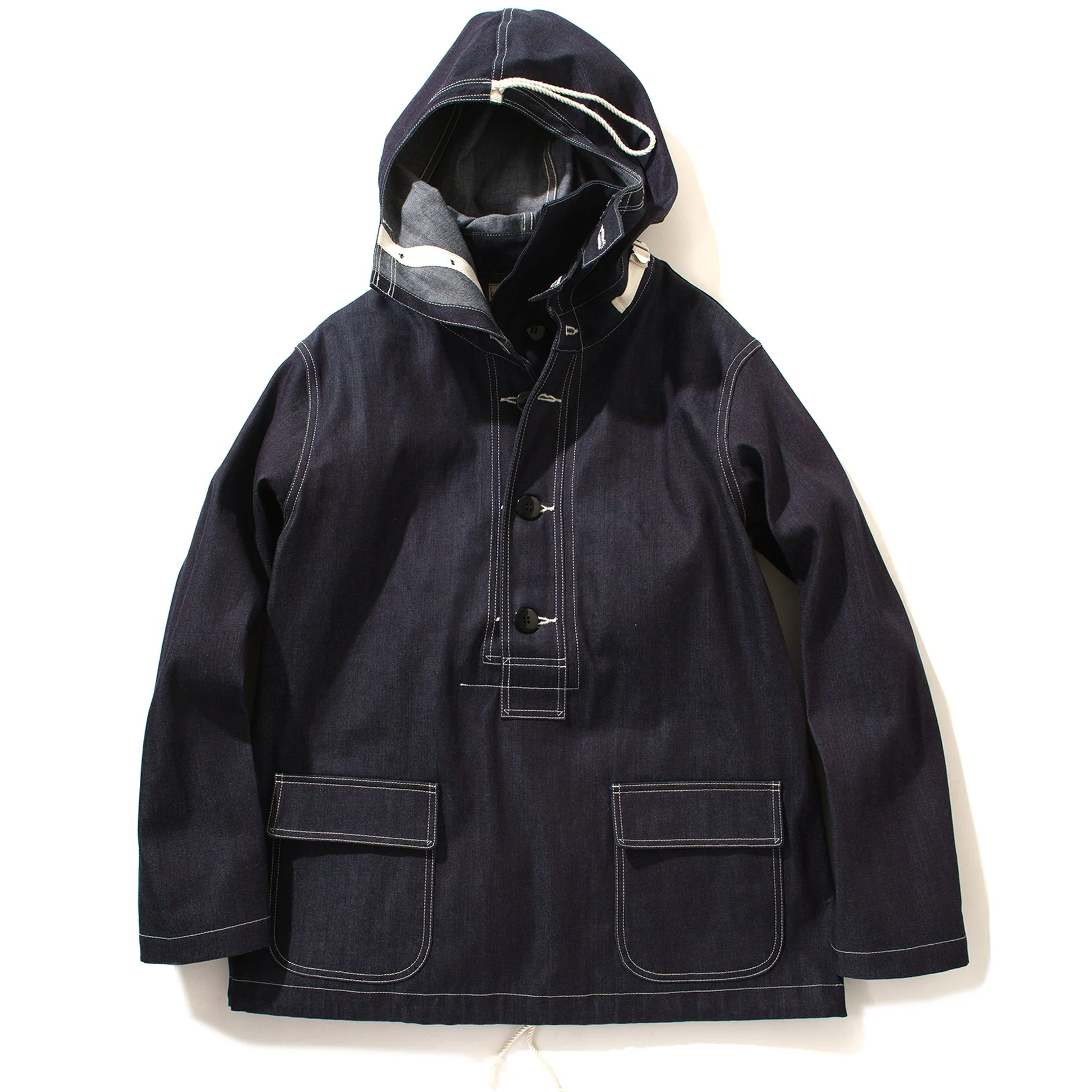
The U.S. NAVY STRIPED DUNGAREE JUMPER follows the same pattern as the denim dungaree jumper adopted by the U.S. Navy prior to and during the Second World War. The label carries a contract number beginning with “NXs,” denoting procurement through the Navy Bureau of Supplies and Accounts and confirming official naval issue. Although surviving labelled examples are rare, several documented pieces are marked “NXSX 60826,” a contract understood to date to April 1944.
The denim dungaree jumper was introduced as a practical working alternative to the wool Dress Blue jumper that had become standard issue during the American Civil War. In 1901, denim dungarees were formally authorized for work duties, with regulations outlined in The Bluejacket’s Manual, first published in 1902 and issued to new Navy recruits. Early examples were pull-over in design, but by 1918 an open-front configuration had come into use, a format better suited to wartime conditions and heavy shipboard labor.
Hickory stripe predates the war, with the fabric emerging in the late nineteenth century as a hard wearing textile used by railroad engineers, mechanics and industrial workers. The indigo and white striping helped conceal oil, coal dust and grease, while the tightly woven cotton construction offered durability comparable to standard denim. By the interwar period, striped work fabrics had become firmly embedded in American labor clothing. While plain indigo denim was the most common material for Navy dungaree uniforms in WWII, the use of hickory stripe reflects the close relationship between civilian industrial clothing and military utility garments of the era. Many vintage examples of this jacket bear a “P” marking indicating that may have been issued to U.S. Navy personnel who had been court-martialed.
The shawl collar on denim jumpers is believed to have been inspired by the flap collar of Sailor’s Dress Blues. This design feature was an aesthetic consideration but also helped to protect sailors from cold breeze on deck.
Original specifications are thought to have called for plain white shell buttons. However, numerous surviving vintage examples have been refitted with anchor-marked change buttons, and this reproduction follows those period references in black oxide iron.
Eyelets were placed at the hem to accommodate “Clothes Stops”, small lengths of white cotton cord with brass ends. The Clothes Stops were the Navy’s version of clothespins and were issued to all new recruits as part of their standard gear. They were used to tie freshly washed laundry to a clothesline or other convenient place to dry.
The indigo yarn used in the hickory fabric is rope dyed, as with period denim. Because the dye does not fully penetrate to the core of the yarn, the fabric will fade gradually through wear, exposing lighter tones beneath, developing a similar character to the most desirable vintage denim workwear.
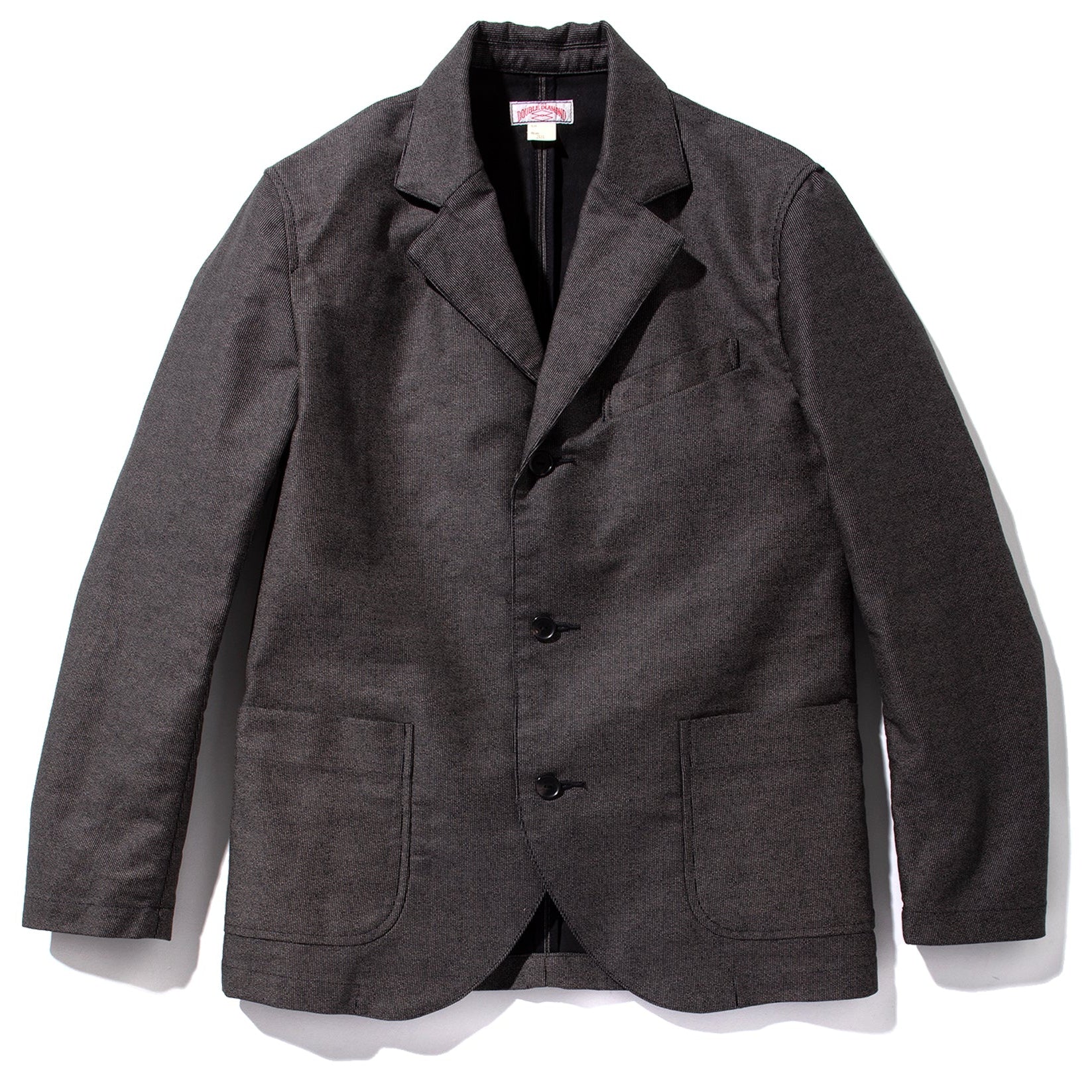
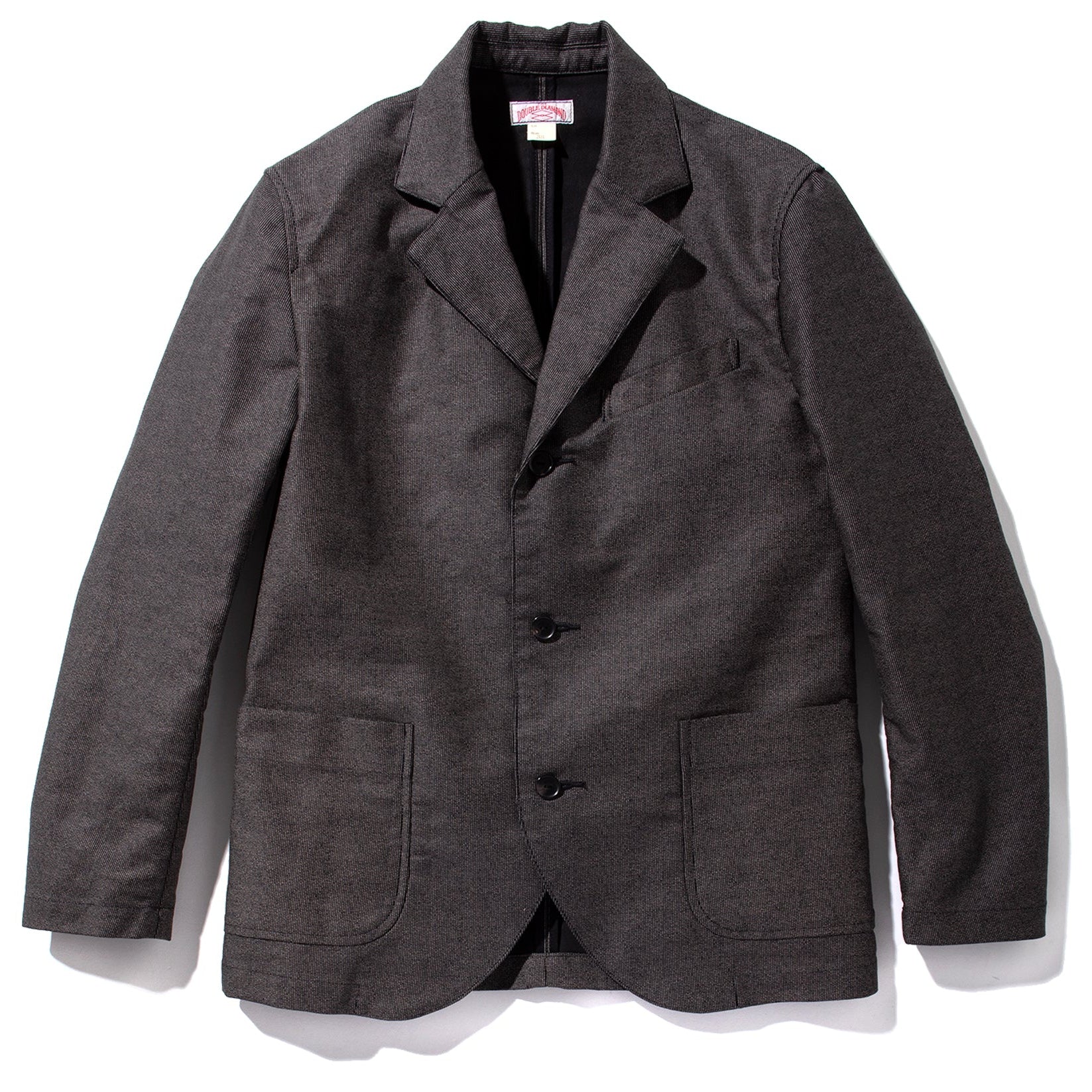
The U.S. NAVY STRIPED DUNGAREE JUMPER features a comfortable shoulder, flared sleeve, and a short hemline, and two patch pockets on the front.
- 100% Cotton, Rope Dyed Indigo Hickory Fabric
- Iron Black Oxide Change Button
- Cotton Sewing Thread Construction
- Made in Japan
The U.S. NAVY STRIPED DUNGAREE JUMPER follows the same pattern as the denim dungaree jumper adopted by the U.S. Navy prior to and during the Second World War. The label carries a contract number beginning with “NXs,” denoting procurement through the Navy Bureau of Supplies and Accounts and confirming official naval issue. Although surviving labelled examples are rare, several documented pieces are marked “NXSX 60826,” a contract understood to date to April 1944.
The denim dungaree jumper was introduced as a practical working alternative to the wool Dress Blue jumper that had become standard issue during the American Civil War. In 1901, denim dungarees were formally authorized for work duties, with regulations outlined in The Bluejacket’s Manual, first published in 1902 and issued to new Navy recruits. Early examples were pull-over in design, but by 1918 an open-front configuration had come into use, a format better suited to wartime conditions and heavy shipboard labor.
Hickory stripe predates the war, with the fabric emerging in the late nineteenth century as a hard wearing textile used by railroad engineers, mechanics and industrial workers. The indigo and white striping helped conceal oil, coal dust and grease, while the tightly woven cotton construction offered durability comparable to standard denim. By the interwar period, striped work fabrics had become firmly embedded in American labor clothing. While plain indigo denim was the most common material for Navy dungaree uniforms in WWII, the use of hickory stripe reflects the close relationship between civilian industrial clothing and military utility garments of the era. Many vintage examples of this jacket bear a “P” marking indicating that may have been issued to U.S. Navy personnel who had been court-martialed.
The shawl collar on denim jumpers is believed to have been inspired by the flap collar of Sailor’s Dress Blues. This design feature was an aesthetic consideration but also helped to protect sailors from cold breeze on deck.
Original specifications are thought to have called for plain white shell buttons. However, numerous surviving vintage examples have been refitted with anchor-marked change buttons, and this reproduction follows those period references in black oxide iron.
Eyelets were placed at the hem to accommodate “Clothes Stops”, small lengths of white cotton cord with brass ends. The Clothes Stops were the Navy’s version of clothespins and were issued to all new recruits as part of their standard gear. They were used to tie freshly washed laundry to a clothesline or other convenient place to dry.
The indigo yarn used in the hickory fabric is rope dyed, as with period denim. Because the dye does not fully penetrate to the core of the yarn, the fabric will fade gradually through wear, exposing lighter tones beneath, developing a similar character to the most desirable vintage denim workwear.
The U.S. NAVY STRIPED DUNGAREE JUMPER features a comfortable shoulder, flared sleeve, and a short hemline, and two patch pockets on the front.
- 100% Cotton, Rope Dyed Indigo Hickory Fabric
- Iron Black Oxide Change Button
- Cotton Sewing Thread Construction
- Made in Japan
Original: $561.09
-65%$561.09
$196.38Description
The U.S. NAVY STRIPED DUNGAREE JUMPER follows the same pattern as the denim dungaree jumper adopted by the U.S. Navy prior to and during the Second World War. The label carries a contract number beginning with “NXs,” denoting procurement through the Navy Bureau of Supplies and Accounts and confirming official naval issue. Although surviving labelled examples are rare, several documented pieces are marked “NXSX 60826,” a contract understood to date to April 1944.
The denim dungaree jumper was introduced as a practical working alternative to the wool Dress Blue jumper that had become standard issue during the American Civil War. In 1901, denim dungarees were formally authorized for work duties, with regulations outlined in The Bluejacket’s Manual, first published in 1902 and issued to new Navy recruits. Early examples were pull-over in design, but by 1918 an open-front configuration had come into use, a format better suited to wartime conditions and heavy shipboard labor.
Hickory stripe predates the war, with the fabric emerging in the late nineteenth century as a hard wearing textile used by railroad engineers, mechanics and industrial workers. The indigo and white striping helped conceal oil, coal dust and grease, while the tightly woven cotton construction offered durability comparable to standard denim. By the interwar period, striped work fabrics had become firmly embedded in American labor clothing. While plain indigo denim was the most common material for Navy dungaree uniforms in WWII, the use of hickory stripe reflects the close relationship between civilian industrial clothing and military utility garments of the era. Many vintage examples of this jacket bear a “P” marking indicating that may have been issued to U.S. Navy personnel who had been court-martialed.
The shawl collar on denim jumpers is believed to have been inspired by the flap collar of Sailor’s Dress Blues. This design feature was an aesthetic consideration but also helped to protect sailors from cold breeze on deck.
Original specifications are thought to have called for plain white shell buttons. However, numerous surviving vintage examples have been refitted with anchor-marked change buttons, and this reproduction follows those period references in black oxide iron.
Eyelets were placed at the hem to accommodate “Clothes Stops”, small lengths of white cotton cord with brass ends. The Clothes Stops were the Navy’s version of clothespins and were issued to all new recruits as part of their standard gear. They were used to tie freshly washed laundry to a clothesline or other convenient place to dry.
The indigo yarn used in the hickory fabric is rope dyed, as with period denim. Because the dye does not fully penetrate to the core of the yarn, the fabric will fade gradually through wear, exposing lighter tones beneath, developing a similar character to the most desirable vintage denim workwear.
The U.S. NAVY STRIPED DUNGAREE JUMPER features a comfortable shoulder, flared sleeve, and a short hemline, and two patch pockets on the front.
- 100% Cotton, Rope Dyed Indigo Hickory Fabric
- Iron Black Oxide Change Button
- Cotton Sewing Thread Construction
- Made in Japan